


RT....This week Max Keiser and co-host Stacy Herbert look at an application for worshiping Ronald Reagan and growing fears of the next sovereign debt crisis. Keiser also speaks to economist Steve Keen about wages, deflation and zombie capitalism.
This episode of The Alyona Show features a discussion of China and Americas different approaches to Afghanistan. In an interview with Christina Larson from Foreign Policy Magazine, Alyona asks if China will reap the financial benefits of the region while the U.S. spends their money and soldiers lives on war. Then, what are the U.S. interests in natural gas? Why are they getting involved in negotiations for the Nabucco pipeline? Also, watch part 2 of Alyonas interview with military journalist David Axe, recently returned from Afghanistan. Then, is healthcare hysteria due to the coincidental release of reports on mammograms? One congressman, is trying to make November 25th, No Complaint Day. Will anyone join the ranks? Also, YouTube launches a new channel for Citizen Journalists. Alyona then interviews Dylan Avery, writer and director of Loose Change, a documentary on the events of 9/11. Then, Alyona asks the audience who the bigger idiot is after a mother calls the police on her 10 year old daughter, and the police use a taser on her.
Next year, for the first time ever, social security recipients will not receive a cost of living adjustment in their payments. Instead, Barack Obama is proposing a one-time $250 payment right before next fall's midterm elections. Gerald Celente says that the cost of living really hasn't decreased, the government is basing their measurements on a decreasing standard of living and the payout is just to keep people quiet.
October 8, 2009
If the dollar collapses, it would spell economic disaster not just for the United States, but for the world, says Gerald Celente, director of the Trade Research Institute.
“It is more than just the demise of the dollar – this is going to be felt worldwide. There’s a major financial crisis ahead. The United States, the world’s superpower, is failing on its most basic level,” Celente told RT.
And the reason for the future demise of the American currency, Celente says, is the disproportionate financial system:
“We can’t print money out of thin air, backed by nothing and producing practically nothing.”
The researcher believes the crisis of the dollar is irreversible, since America is losing its gold – the value of its currency.
CNBC
October 6, 2009
With the prospect of higher unemployment hanging over the markets, some experts expect a correction. So are they right? Michael Cuggino, president and portfolio manager at Permanent Portfolio Funds, and John Lekas, CEO and portfolio manager at Leader Capital, shared their insights.
“I think we go below the double dip,” Lekas told CNBC. “By year-end, we drop below 6,300 on the Dow and by 2011, we’re at 4,200.”
Lekas said although Monday’s ISM services index was “neutral,” the unemployment number was at 785,000 last month and that number is expected to worsen.
Full Article: http://www.cnbc.com/id/33179408
Economist, author and journalist Max Wolff sits down with RT's Anastasia Churkina to explain why it's too early for Americans to throw on the party hats - the worst for the economy is still to come.
Gerald Celente - the most trusted name in trends - sits down for an exclusive interview with RT's Anastasia Churkina to talk about what the future holds for America during and after the Great Recession, gives advice to Obama, and forecasts the unexpected.
Quoted from http://www.telegraph.co.uk/finance/financetopics/recession/6196531/UK-unemployment-jumps-to-highest-since-1995-as-recession-pain-bites.html:
The number of Britons joining the dole queue climbed by 210,000 to 2.47 million in the three months to the end of July, figures from the Office for National Statistics showed today. That's the highest level since 1995.
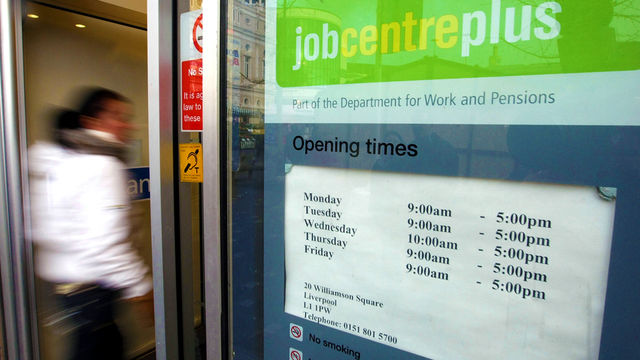
Mervyn King, the Governor of the Bank of England, said on Tuesday that while there are signs the economy is beginning to grow again, it's not likely to feel any different for most people. It was a view echoed today by the fashion retailer Next, which said that it sees little reason for "the consumer outlook to significantly change through the rest of the year."
The recession has forced companies across the economy to axe staff and ditch investment plans. The retail, construction and financial services industries have been among those hardest hit. However, the cuts have spread to even the more resilient industries such as defence, with BAE, which helps build the Eurofighter, announcing plans yesterday to close a factory in Cheshire.
"Unemployment still looks likely to go reach 3 million in 2010, and could go higher," said Howard Archer, an economist at Global Insight. "Even if the economy does return to growth in the third quarter, activity is still unlikely to be strong enough for some considerable time to come to prevent further net job losses."
Despite evidence that the economy has technically emerged from recession, most experts expect a recovery to be sluggish as Britons grapple with their debts and trim spending in the face of rising unemployment.
It's a picture mirrored in the US, where Ben Bernanke, the chairman of the Federal Reserve, cautioned that a recovery will be long and hard.
Separate figures showed that the number of people claiming unemployment benefit rose by 24,400 in August, similar to what economists had forecast. Sterling was little changed against the dollar at $1.6477 after the figures were released while the FTSE 100 stayed 1pc stronger at 5096.28.
UK unemployment jumps to highest since 1995 as recession pain bites | Telegraph
The past year of economic decline has seen Washington’s influence on the wane, as well as London’s, and the way is now open for other countries to decide policy. Among them: Russia and her BRIC colleagues.
It has been a year since pictures of the collapse of US investment bank Lehman Brothers were beamed around the world – unprecedented images of bankers, the so-called Masters of the Universe, leaving Wall Street offices with their possessions in cardboard boxes.
To many of us, the financial crisis has meant job losses and home repossessions, but to economists, it is changed the fabric of our society, and accelerated a long-awaited move towards a multi-polar world.
A global society that no longer marches to the beat of America’s drum isn’t here just yet – but the direction is clear. The world, more and more, is turning towards new leaders and new currencies for solutions.
Doctor Paola Subacchi, research director of International Economics, Chatham House, thinks the economic crisis can be viewed as a catalyst for change“Countries which were growing fast, their economies were expanding, they were gaining more visibility in international relations terms – I’m thinking of the BRIC,” she says.
The platform for that movement was last April’s G20 summit in London. Created in the late nineties, the G20 was a response to the financial crises of that era. Its goal was to include key emerging market countries in global economic decision making, and they have met three times already.
“The upgrade of the G20 from a finance ministers’ meeting to a head of state meeting is very important. And it’s very important now to see around the table many more countries representing a large majority, almost the totality of global GDP,” Subacchi adds.
With their new, louder voice, the BRIC countries – Brazil, Russia, India and China – are calling for a move away from the dollar as the major global reserve currency. Throughout the last decade, an average of two thirds of the world’s foreign exchange reserves has been held in dollars.
“Countries like Russia and China and Brazil are trying to divorce themselves from the US, because it’s a completely toxic currency that’s just right for fraud. It supports an empire that’s just too lazy to compete,” financial analyst Max Keiser says.
Having a variety of reserve currencies wouldn’t just have economic significance. Geopolitically, if countries held reserves in roubles or yuan, Russia and China would gain weight in the international arena, and be more able to direct policy.
Chris Higson, a Professor at London Business School, believes the world would be a better place “if we simply don’t rely on one possibly unreliable superpower exercising its authority.”
Earlier this month, the UN backed the creation of an artificial currency for foreign exchange reserves. It is the first time a major multinational institution has come up with such a suggestion.
14 Sep 2009
 Around £1.5 trillion of taxpayers' money has been squandered on an acceleration in Government spending fuelled by the economic boom, while another £1.5 trillion has evaporated in measures to tackle the recession, according to the research.
 The authors claim that Government spending has more than doubled in real terms since 1997, to the extent that even if the next government tries to trim spending by 5-10 per cent, it will take years, probably even decades, to bring it back under control, and could cost upwards of a further £1 trillion.
Mr Brown has taken public spending to the level reached by Harold Wilson and James Callaghan in 1976 - when the country went bankrupt and needed the IMF to bail it out, they say.
One of the authors, Matthew Elliott, founder and chief executive of campaigning group the TaxPayers' Alliance, said: ''It would be easy to dismiss the figure of £3 trillion as being too big to contemplate or unreasonably high, but to do so would be to ignore the sheer scale of the financial disaster that 12 years of Gordon Brown's tax-a-lot and spend-more policies have done to the British economy.
''In the light of our analysis, £3 trillion is actually a best possible scenario and relies upon the UK making a far quicker recovery than most expect.''
Mr Elliott and management consultant David Craig say that by the end of the 2009-10 financial year, the present Government will have spent almost £1.7 trillion more in cash terms (about £1.35 trillion when adjusted for inflation) than would have been spent had Mr Brown and his colleagues kept public spending at the levels inherited from the Conservatives.
''Adding in more than £150 billion in Private Finance Initiative (PFI) projects and other schemes which the Government has kept off its balance sheet through various creative accounting techniques, you're almost up to £2 trillion in cash terms or £1.5 trillion after taking inflation into account,'' they say.
The value of UK shares has fallen by around £474 billion since 1997, which will seriously affect anyone with savings in stocks, unit trusts or a pension fund, they say.
Meanwhile, the estimated future costs of public sector pensions have risen from around £360 billion in 1997 to more than £880 billion today, while ''cautious estimates'' suggest that of the total £1.227 trillion made available to the banks, taxpayers will lose at least £200 billion, they add.
Extra borrowing of £561 billion takes the total involved over £3 trillion, they say.
11 September, 2009, 09:05
Hit by the recession, the once-prosperous UK town of Swindon has one of the highest unemployment rates in the country. Many fear it will lead to a whole generation of people who've lost their will to work.
During the last decade, the town of Swindon has been one of the UK's booming economies, creating a wide range of job opportunities. But now the things have changed.
Walk down the high street in almost any British provincial town nowadays, and you’ll see boarded up shops. But probably not as many as you’ll see in Swindon in the South West of England. Home to around 155,000 people, it’s one of the UK’s worst recession-hit towns, with a rise in unemployment of 147% in the year to July.
Swindon is home to 600 NEETs – young people "Not in Employment, Education or Training". The recession threatens to produce a generation of young people here who have been trying and failing to get jobs, and have lost the will to work. That’s something local MP Anne Snelgrove is all too aware of.
“We can’t have them sitting around doing nothing for two or three years during this recession, and as it picks up, because they are then very much unemployable for the next 10 years of their lives. We’ll lose a whole generation in Swindon if we’re not careful,” she said.
Swindon is a microcosm of the industries that have been hit by the crisis – it hosts a mixture of high-tech firms like finance, IT and banking, and manufacturing.
The local Honda factory has recently reopened after a four-month closure, during which it managed to retain its entire staff on at least some pay. But that closure had a massive knock-on effect, according to Mike Little, director of recruitment agency Storm.
“There are 50, 60 small businesses, and quite large businesses that supply to Honda,” he said. “So when they shut down, and with the banks the way they are, they weren’t prepared to back them for the six months, so a lot of them have gone to the wall.”
Storm Recruitment is on Commercial Road, previously a premium location full of estate agents, banks and employment firms. Now, many of the units lie empty.
This year of recession has turned Swindon from a thriving multi-sector hub into a depressed town, and that’s particularly apparent in its many industrial estates. Like a lot of places in the UK, Swindon has seen signs of recovery, but it’s a fragile improvement, and brings with it no guarantee of a return to former prosperity.
Fluff......
The unanswerable question remains of the banker bailouts only to be derived once again with an endless pit bonuses and high risk booms which are just around the corner. The "back to business as usual" attitude is deplorable.
Our Governments are a sham with worthless ethics and over stated positions in our monetary policy, who link hands with the very same people who took us down the garden path, that very same path is now laden with weeds.
And the question is? was it really worth the bailout money!!
I think most people know deep down the answer is "NO" as the cost to Joe public is higher taxes and a public service drastically cut and in basic terms - "less bang for YA buck"
Telegraph,
9:07PM BST 08 Sep 2009

The Pension Protection Fund (PPF), which oversees the assets of nearly 7,400 defined-benefit occupational schemes and administers payments to members of schemes where employers have gone bust, said ballooning liabilities were driving up deficits despite the recent stock market rally which has improved asset values.
Deficits – liabilities minus assets – worsened during August by £16bn to £195bn, while the value of the FTSE All-Share Index rose by 7.1pc. This time last year, deficits stood at just £93bn. The PPF said 6,304 schemes are now in deficit – representing 85pc of the total.
Surpluses in those schemes which still have them have also plummeted, from £53bn this time last year to £21.4bn now. Although rising share prices caused the value of assets in pension funds to increase by 3.3pc, lower gilt yields forced pension scheme liabilities to rise by 5.2pc.
A spokesman for the PPF said: “Over the past year, falling equity markets and bond yields have led to an overall worsening of the funding position. Lower bond yields resulted in a 9.6pc increase in aggregate liabilities, while weaker equity prices reduced assets by 3.1pc over the year.”
Pensions consultant John Ralfe warned that pension liabilities will continue to grow, in spite of recovery in the stock market. The Government’s appetite for quantitative easing is one factor causing them to expand.
Mr Ralfe said: “It is easy to focus on asset growth, but we need to look at what has happened to pension liabilities. Higher UK share prices have been largely driven by falls in bond yields, which have also increased pension liabilities. UK pension plans have been running to stand still. UK plc continues to run a huge asset and liability mismatch through holding equities to meet bond-like pensions.”
Growing pension liabilities have already caused nine out of 10 final-salary schemes to close the doors to new employee members. Many employers are now closing schemes to existing members as well.
Steve Webb, Liberal Democrat work and pensions spokesman , said the plight of workplace pensions will put intolerable pressure on the state in future to support people who had expected to rely on them in old age. “With public sector pensions likely to be reined back along with their private sector counterparts, more and more workers will find themselves facing means-testing in old age,” he said.
“If the Government really wants to give people dignity and security in old age, it should guarantee a more generous basic state pension.”
Recession over, says forecaster, as UK economy records first quarterly growth in a year
Last updated at 3:55 PM on 08th September 2009
 The UK recorded its first quarterly growth since May last year in the three months to August, a respected economic forecaster said today.
The National Institute of Economic and Social Research's latest estimate showed a 0.2 per cent rise in output after a 0.3 per cent decline in the three months to July.
NIESR said the figures reinforced its view that the recession ended in May - although the body predicted earlier this year that the downturn would end in March.
However, the forecaster warned a return to growth should not be confused with a full economic recovery.
It added: 'There may well be a period of stagnation now, with output rising in some months and falling in others; the end of the recession should not be confused with a return to normal economic conditions.'
Experts predict the Office for National Statistics' estimates for output between June and September will show a return to growth after a 0.7 per cent drop in the second quarter.
More...Public spending will have to be cut but not yet, admits Darling
The new forecast came as manufacturing figures today showed a 0.9 per cent rise in output between June and July, boosted by recovering production in the car industry.
It was the sector's best performance in more than three years and outstripped experts' expectations who had only predicted a 0.3 per cent increase.
The wider measure of industrial output, which includes energy production, rose by 0.5 per cent on the month.
Sterling climbed more than 1 per cent against the dollar on the back of the encouraging data and on the dollar's broad fall.
Analysts said the figures suggested Britain's economy may be on track to emerge from recession.
'Today's data reinforce our view that the UK economy is on course for positive growth in Q3,' said Colin Ellis, economist at Daiwa Securities.
Even if production is unchanged in August and September, manufacturing output would be on course to grow some 1.0 percent in the third quarter, he added.
The data bolstered the pound, which was already rising on a sharp drop in the dollar against a number of currencies.
The dollar index, which tracks the performance of the greenback versus a basket of six other major currencies, hit its lowest level since September 2008.
Shortly after 2pm, sterling was up 1 per cent at $1.652 after rising to $1.659 - its highest level since August 21.
However, sterling made little headway against the euro.
The money markets are still wary of further monetary easing, which could be decided at the Bank of England's policy meeting later this week.
The UK's central bank surprised traders last month by expanding its asset buying programme by a larger margin than expected.
Minutes showed governor Mervyn King and two other members of the panel had voted for an even larger increase.
Markets shrugged off a survey showing British retail sales fell on the year last month for the first time since May.
The British Retail Consortium said the value of like-for-like sales fell 0.1 percent in August compared to the same month last year after a 1.8 percent annual gain in July.
Alistair Darling said today that the Government would have to cut spending when the economy had fully recovered but did not spell out where the axe would fall.
He insisted it would be wrong to curtail spending and investment now because it would risk 'choking off' the recovery before it has even properly begun.
Read more: http://www.dailymail.co.uk/news/article-1211999/Recession-ended-May-says-forecaster-UK-economy-records-quarterly-growth-year.html#ixzz0QWqHfZPv
6:45PM BST 07 Sep 2009
 In a radical report, the UN Conference on Trade and Development (UNCTAD) has said the system of currencies and capital rules which binds the world economy is not working properly, and was largely responsible for the financial and economic crises.
 It added that the present system, under which the dollar acts as the world's reserve currency , should be subject to a wholesale reconsideration.
Although a number of countries, including China and Russia, have suggested replacing the dollar as the world's reserve currency, the UNCTAD report is the first time a major multinational institution has posited such a suggestion.
In essence, the report calls for a new Bretton Woods-style system of managed international exchange rates, meaning central banks would be forced to intervene and either support or push down their currencies depending on how the rest of the world economy is behaving.
The proposals would also imply that surplus nations such as China and Germany should stimulate their economies further in order to cut their own imbalances, rather than, as in the present system, deficit nations such as the UK and US having to take the main burden of readjustment.
"Replacing the dollar with an artificial currency would solve some of the problems related to the potential of countries running large deficits and would help stability," said Detlef Kotte, one of the report's authors. "But you will also need a system of managed exchange rates. Countries should keep real exchange rates [adjusted for inflation] stable. Central banks would have to intervene and if not they would have to be told to do so by a multilateral institution such as the International Monetary Fund."
The proposals, included in UNCTAD's annual Trade and Development Report , amount to the most radical suggestions for redesigning the global monetary system.
Although many economists have pointed out that the economic crisis owed more to the malfunctioning of the post-Bretton Woods system, until now no major institution, including the G20 , has come up with an alternative.
9:55PM BST 06 Sep 2009

His policies even have the potential to consign the US to a similar fate as Argentina, which suffered a painful and humiliating slide from first to Third World status last century, the paper says.
There are "troubling similarities" between the US President's actions since taking office and those which in the 1930s sent the US and much of the world spiralling into the worst economic collapse in recorded history, says the new pamphlet, published by the Institute of Economic Affairs.
In particular, the authors, economists Charles Rowley of George Mason University and Nathanael Smith of the Locke Institute, claim that the White House's plans to pour hundreds of billions of dollars of cash into the economy will undermine it in the long run. They say that by employing deficit spending and increased state intervention President Obama will ultimately hamper the long-term growth potential of the US economy and may risk delaying full economic recovery by several years.
The study represents a challenge to the widely held view that Keynesian fiscal policies helped the US recover from the Depression which started in the early 1930s. The authors say: "[Franklin D Roosevelt's] interventionist policies and draconian tax increases delayed full economic recovery by several years by exacerbating a climate of pessimistic expectations that drove down private capital formation and household consumption to unprecedented lows."
Although the authors support the Federal Reserve's moves to slash interest rates to just above zero and embark on quantitative easing, pumping cash directly into the system, they warn that greater intervention could set the US back further. Rowley says: "It is also not impossible that the US will experience the kind of economic collapse from first to Third World status experienced by Argentina under the national-socialist governance of Juan Peron."
The paper, which recommends that the US return to a more laissez-faire economic system rather than intervening further in activity, has been endorsed by Nobel laureate James Buchanan, who said: "We have learned some things from comparable experiences of the 1930s' Great Depression, perhaps enough to reduce the severity of the current contraction. But we have made no progress toward putting limits on political leaders, who act out their natural proclivities without any basic understanding of what makes capitalism work."
Sunday 6 September 2009 15.09 BST
in Brief:
Taxpayers could foot bill for inflated valuations of assets in government's protection scheme amid talk of potential 'fraud'

Banks are significantly overvaluing assets to be included in the government's insurance scheme, which could leave the taxpayer footing the bill for any shortfall, experts have warned.
Property loans – which will be part of the £575bn government's asset protection scheme (APS) to ring-fence the most toxic assets of Lloyds Banking Group and Royal Bank of Scotland – will be dated as of the end of December 2008 although commercial real estate values have fallen by just over 10% since then, according to data from the consultancy Investment Property Databank.
Matthew Oakeshott, the Liberal Democrat Treasury spokesman, said: "The APS is a ticking time-bomb for the British taxpayer. These poisonous property loans must have an independent, up-to-date valuation in accordance with the Rics [Royal Institution of Chartered Surveyors] valuation 'red book' when taxpayers actually go on the hook.
"If not, the APS will be a fraud on the British taxpayer – just like someone insuring a car after it has crashed."
Oakeshott is writing a letter to the chancellor, Alistair Darling, raising his concerns about what he called "taxpayers being stung in an APS cover-up". According to him, Britain should follow the Irish government, which is contracting independent valuers to put a price on banks' property loans before they go into a so-called "bad bank".
Governments around the world have designed programmes to insure, protect or ring-fence toxic assets to help re-establish confidence in the financial system and encourage banks to start lending again. RBS is putting about £60bn of commercial property loans into the APS, out of a total £315bn of assets, while Lloyds' property loans in the scheme mount to £90bn, out of an overall £260bn, according to Credit Suisse estimates.
Other Key points:
The banks are paying a fee to the government for insuring their toxic assets and analysts differ over whether they will be forced to shoulder losses above that level. The government made a £25bn provision for APS-related losses in the budget.
Oakeshott believes it would be better to be more realistic and take the pain right away. "Japan's long agony in the 80s and 90s after a property price crash should teach us one single lesson – it's far better to take the pain up front and move on than trying to hide overvalued property off balance sheet for years on end," he said. "Our government must not sweep this £500bn problem under the carpet until after the election."
Full article: http://www.guardian.co.uk/business/2009/sep/06/banks-overvaluing-insured-property-assets
Fluff.......
We don't really think that banks would over value their toxic assets dump them on the tax payer and commit fraud surely not?
Fri Sep 4, 2009 5:11pm BST
 U.S. job losses were the smallest in a year last month but the unemployment rate unexpectedly jumped to a 26-year high, according to data on Friday that showed the labour market limping towards health.
The Labour Department said the jobless rate climbed to 9.7 percent in August, the highest since June 1983. The increase suggests consumer spending will remain weak and impede the economy's recovery from the worst recession in seven decades.
Employers cut 216,000 jobs, the smallest since August 2008, but payroll losses in June and July were 49,000 more than initially estimated, the department said.
"The continued moderation in the pace of job losses offers some encouragement on the state of the U.S. labour market," said Millan Mulraine, economics strategist at TD Securities in Toronto.
Analysts had expected non-farm employers to cut 225,000 workers from their payrolls in August and had looked for the unemployment rate to rise to 9.5 percent after dipping to 9.4 percent in July.
Market reaction to the mixed data was modestly positive. U.S. stocks edged higher, while U.S. government bond prices fell on the hint of steady economic improvement.
"The trajectory is in the right direction," Obama economic adviser Christina Romer told CNBC television.
Stubbornly high unemployment is wearing on consumer confidence and crimping spending, pointing to an anaemic recovery from the recession that started in December 2007.

Other key points:
A gauge of labour market slack that measures both the officially unemployed and discouraged jobseekers rose to a record 16.8 percent in August from 16.3 percent in July.
Since the start of the recession in December 2007, the economy has shed 6.9 million jobs.
The average workweek, which closely correlates with overall output and gives clues on when firms will start hiring, was unchanged at 33.1 hours in August.Average hourly earnings rose to $18.65 in August from $18.59 in July. It was the fourth straight monthly gain, reflecting an increase in the legal minimum wage.
"It certainly sustains perceptions that the economy gradually is swinging to recovery. The main pitfall would be continued weak income growth but that was not the case in August, so that's encouraging," said Pierre Ellis, senior economist at Decision Economics in New York.
Full article: http://uk.reuters.com/article/idUKTRE58333820090904?pageNumber=1&virtualBrandChannel=0
Fluff.....
Although signs of short term stabilization are in, the bleak facts remain high unemployment = high Government expenditure, rise in taxes and public sector cuts.
So yes we rally for in the stock market today, but DEPT is the long term driver and trust me this is going into a depression....!
When the UK Government plans public sector jobs cut and 1 in 10 NHS to be culled you know thing are starting to bite......... strikes are on the way!!


